
You’ve drilled a hole for a new light fitting, removed an old panel, started sanding a textured ceiling or cut into some boxing during a renovation.
Then somebody says:
“That could contain asbestos.”
It’s an understandably worrying moment, and one that happens more often than many people realise in older UK properties.
Perhaps you’ve drilled through an Artex ceiling. Maybe a contractor has disturbed asbestos insulation board (AIB), or you’ve started removing old floor tiles before discovering they could contain asbestos.
Whatever has happened, the most important thing now is not to panic and not to disturb the material any further.
Here’s what you should do if you’ve accidentally drilled, cut, broken or otherwise disturbed material that you suspect could contain asbestos.
First: Stop Work
The first step is simple:
Stop whatever you’re doing.
Don’t drill another hole to “check”.
Don’t break off a piece.
Don’t start cleaning the area.
And don’t continue with the renovation until you understand what you’re dealing with.
Asbestos-containing materials generally present the greatest concern when they are disturbed in a way that can release fibres.
Activities that can potentially cause this include:
- Drilling
- Cutting
- Sawing
- Sanding
- Scraping
- Breaking
- Grinding
- Removing materials
- Using power tools
Stopping work prevents additional unnecessary disturbance while the situation is assessed.
Keep Other People Away From the Area
If you’ve disturbed suspected asbestos, restrict access to the immediate area.
That could mean closing the door to a room or preventing contractors, employees, residents or family members from entering unnecessarily.
In a commercial building, school, office or residential block, the situation may require more formal isolation depending on what has been disturbed and where it is located.
The aim is simply to prevent people from unnecessarily entering an area until the potential risk has been assessed.
Don’t Reach for the Vacuum Cleaner
This is an important one.
Your instinct after drilling or creating dust might be to grab the household vacuum cleaner and tidy everything up.
Don’t.
A normal domestic vacuum cleaner isn’t designed for asbestos contamination and could potentially redistribute fine particles into the surrounding environment.
Likewise, avoid:
- Sweeping dust with a broom
- Dry brushing surfaces
- Blowing dust away
- Using compressed air
- Shaking dusty clothing
- Carrying debris through the property
The less you disturb the area, the better.
I’ve Drilled Into an Artex Ceiling – Should I Panic?
This is probably one of the most common scenarios.
You’re installing:
- Spotlights
- Smoke alarms
- Curtain fittings
- New electrical cables
- Ceiling fixtures
…and then realise the textured coating might be old enough to contain asbestos.
Firstly, not every Artex or textured coating contains asbestos.
Asbestos was historically used in some textured coatings, particularly products applied before its prohibition in the UK. Modern Artex products do not contain asbestos.
Secondly, the level of potential fibre release will depend on numerous factors, including the material involved and the extent of disturbance.
One drilled hole isn’t the same scenario as mechanically sanding an entire ceiling.
However, if you suspect the coating may contain asbestos, stop further work and have the material properly assessed before continuing.
What Other Materials Might Accidentally Be Drilled Into?
Artex isn’t the only material that can catch people out.
Asbestos-containing materials can be hidden throughout older buildings, including:
Asbestos Insulation Board (AIB)
Historically used in partition walls, ceiling panels, fire protection and service areas.
Soffits
Older soffit boards may contain asbestos and can be disturbed during roof, fascia or guttering projects.
Pipe Boxing
Boxing around older heating and service systems can incorporate asbestos-containing materials.
Ceiling Panels
Particularly in older commercial, industrial and public buildings.
Asbestos Cement Products
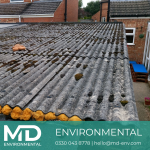
Found in roofing sheets, wall panels and other external building products.
Floor Tiles and Adhesives
These are more commonly disturbed during lifting, scraping or floor preparation rather than drilling.
The difficulty is that you usually cannot reliably identify asbestos just by looking at a material.
How Do I Know Whether I’ve Actually Drilled Into Asbestos?
You may not.
Many asbestos-containing materials look almost identical to asbestos-free alternatives.
The age of the building, appearance of the material and its location can provide clues, but they cannot provide certainty.
Where appropriate, professional sampling can be carried out and analysed by a laboratory to establish whether asbestos is present.
This is why it’s better to test than guess.
What If I’ve Already Breathed in Some Dust?
This is understandably where people’s minds immediately go.
It’s important to put the situation into perspective.
Asbestos-related diseases are generally associated with the amount of fibres inhaled and cumulative exposure over time. Occupational exposure historically involved people repeatedly breathing significant concentrations of asbestos fibres during their working lives.
That doesn’t mean accidental exposure should be ignored, but accidentally drilling one hole into a suspect material does not automatically mean you will develop an asbestos-related disease.
The priority is to prevent any further potential exposure and establish what the material actually is.
If you’re concerned about a possible exposure and your health, seek advice from an appropriate healthcare professional.
Should I Take a Sample Myself?
We wouldn’t recommend breaking off additional material simply to find out whether it contains asbestos.
Taking a sample itself involves disturbing the suspect material.
Professional asbestos sampling allows a representative sample to be taken using appropriate procedures while minimising unnecessary disturbance.
The sample can then be analysed to determine whether asbestos fibres are present.
What Happens If Testing Confirms Asbestos?
Finding asbestos doesn’t automatically mean the entire ceiling, wall or building needs to be stripped out.
The appropriate next step depends on factors including:
- The asbestos-containing material
- Its condition
- How much has been disturbed
- Its location
- Whether future works are planned
- The likelihood of further disturbance
Depending on the circumstances, the material may be:
- Managed in place
- Encapsulated
- Repaired
- Professionally removed
For higher-risk asbestos materials and certain types of work, a licensed asbestos removal contractor may be required.
What If a Contractor Accidentally Disturbs Asbestos?
Accidental asbestos disturbance isn’t limited to DIY.
It can occur during:
- Electrical installations
- Plumbing works
- HVAC maintenance
- Roofing projects
- Refurbishments
- Commercial fit-outs
- Demolition preparation
If a contractor encounters suspected asbestos, work in the affected area should stop and the situation should be assessed before activities continue.
This is one reason why appropriate asbestos information and surveys are so important before intrusive works begin.
Commercial Buildings Require Extra Planning
An accidental disturbance within an office, school, warehouse, hospital, care facility or residential block can be more complicated because other people may be nearby.
Consideration may need to be given to:
- Building occupants
- Contractors
- Adjacent work areas
- Ventilation systems
- Access routes
- Operational requirements
Professional assessment can help determine what controls are appropriate and whether further investigation, cleaning, air monitoring or removal is required.
How Can You Avoid Drilling Into Asbestos in the Future?
The easiest asbestos incident to deal with is the one that never happens.
Before drilling, cutting or carrying out intrusive work in an older building, consider:
The Age of the Building
Buildings constructed or refurbished before 2000 may contain asbestos-containing materials.
The Asbestos Register
For relevant non-domestic premises, check available asbestos information before maintenance work begins.
Surveys
Where refurbishment or other intrusive works are planned, ensure the appropriate asbestos survey covers the proposed work area.
Sampling
If one particular material is suspect, targeted sampling may provide the information required.
Contractor Communication
Anyone carrying out work should be given relevant asbestos information before they start.
A five-minute check before drilling can prevent a much bigger problem afterwards.
Why “It’ll Probably Be Fine” Isn’t a Good Asbestos Strategy
One of the difficulties with asbestos is that there often isn’t an obvious warning.
You can’t see individual airborne asbestos fibres with the naked eye.
You can’t smell them.
And an asbestos-containing board may look completely ordinary.
That’s why continuing to drill, cut or demolish a suspect material based on appearance alone isn’t worth the risk.
Stopping and checking is usually far easier than managing a larger disturbance later.
Frequently Asked Questions
What should I do immediately if I’ve drilled into suspected asbestos?
Stop work, avoid disturbing the area further, keep unnecessary people away and seek professional asbestos advice before continuing.
I’ve drilled one hole into Artex. Is it dangerous?
Not all Artex contains asbestos, and a single drilled hole does not automatically mean significant exposure has occurred. Stop further disturbance and consider professional testing if the coating could contain asbestos.
Can I vacuum asbestos dust?
A normal household vacuum cleaner should not be used to clean suspected asbestos contamination, as it is not designed for this purpose.
How can I tell if the material I drilled contains asbestos?
You generally cannot confirm asbestos visually. Laboratory analysis of an appropriately taken sample is used to determine whether asbestos is present.
Does one accidental asbestos exposure mean I’ll become ill?
No. Asbestos-related disease risk generally increases with cumulative exposure, and a one-off incident does not mean you will develop an asbestos-related condition. Potential exposure should still be taken seriously and further disturbance avoided.
Should I remove the material if asbestos is confirmed?
Not necessarily. Depending on its type, condition and likelihood of future disturbance, asbestos may sometimes be safely managed or encapsulated rather than removed.
Can work continue elsewhere in the building?
That depends on the nature and extent of the disturbance. For commercial or larger incidents, professional assessment should determine what areas need to be restricted and what controls are required.
Accidentally Disturbed Suspected Asbestos? Speak to MD Environmental
If you’ve drilled, cut, broken or disturbed a material that you think could contain asbestos, don’t make the situation worse by continuing work or attempting to clean it up yourself.
MD Environmental can help assess the situation and determine the safest next step.
Our services include:
- Asbestos Surveys & Sampling
- Licensed Asbestos Removal
- Refurbishment & Demolition Surveys
- Commercial & Domestic Asbestos Solutions
- Support Following Unexpected Asbestos Discoveries
Whether you’re a homeowner who’s drilled through an old textured ceiling or a contractor who’s uncovered suspect materials during refurbishment, our experienced team can provide clear, practical advice.
Call: 0330 043 8778
Email: hello@md-env.com
Contact MD Environmental today for expert asbestos advice and a no-obligation quote.