
You’ve got contractors booked, materials ordered, and a refurbishment project ready to go.
Then someone removes a ceiling tile, lifts an old floor, opens a service riser, or strips out a wall panel and suddenly the words nobody wants to hear are spoken:
“This could be asbestos.”
Unfortunately, this scenario plays out across the UK every day.
Whether it’s a home renovation, office refurbishment, school upgrade, industrial redevelopment, or commercial fit-out, asbestos is still regularly discovered during refurbishment works.
When it is, projects can grind to a halt almost instantly.
The good news? Most delays, disruptions, and unexpected costs can be avoided with proper planning and professional support.
Why Is Asbestos Still Being Found Today?
Although asbestos was banned in the UK in 1999, it was used extensively in construction materials for decades.
As a result, many buildings built or refurbished before 2000 may still contain asbestos-containing materials (ACMs).
In many cases, these materials remain hidden behind walls, above ceilings, beneath flooring, or within service areas until refurbishment work begins.
This means property owners often have no idea asbestos is present until the project is already underway.
The Most Common Places Hidden Asbestos Is Discovered
We regularly encounter asbestos in locations such as:
Ceiling Voids
Hidden above suspended ceilings and within service spaces.
Floor Tiles & Adhesives
Older vinyl tiles and black bitumen adhesives frequently contain asbestos.
Pipe Lagging
Particularly common within boiler rooms, plant rooms, and service areas.
Asbestos Insulation Board (AIB)
Often found in partition walls, risers, ceiling panels, and fire protection systems.
Service Ducts & Risers
Areas containing pipework, cables, and mechanical services are common locations for asbestos-containing materials.
Textured Coatings
Older Artex and decorative finishes may contain asbestos fibres.
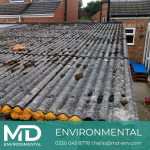
Roofing & Soffits
Especially in garages, outbuildings, warehouses, and older commercial properties.


What Happens When Asbestos Is Found Mid-Project?
When suspected asbestos is discovered during refurbishment, the correct response is simple:
👉 Stop work immediately.
Continuing work without identifying the material creates significant risks for:
- Contractors
- Occupants
- Property owners
- Visitors
The affected area should be isolated until the material can be properly assessed and tested.
While this may seem frustrating, it’s often the quickest way to prevent much larger problems later.
Why Work Must Stop Immediately
Asbestos becomes dangerous when fibres are released into the air.
This can happen when materials are:
- Drilled
- Cut
- Broken
- Sanded
- Removed
Once disturbed, fibres can spread throughout the work area and potentially contaminate surrounding spaces.
Stopping work immediately helps:
- Protect workers
- Prevent contamination
- Reduce clean-up costs
- Ensure compliance with regulations
How Asbestos Delays Impact Budgets
One of the biggest frustrations for property owners is the unexpected cost that follows an asbestos discovery.
Potential impacts include:
Additional Survey Costs
Further inspections and testing may be required.
Project Delays
Contractors may need to be rescheduled.
Temporary Site Closures
Some areas may become inaccessible until works are completed.
Specialist Removal Costs
Licensed asbestos removal may be required before refurbishment can continue.
Extended Project Timelines
Every day of delay can affect budgets and programme schedules.
The longer a project remains paused, the more expensive it often becomes.
Commercial Projects Face Even Greater Challenges
For commercial buildings, unexpected asbestos discoveries can have wider implications.
Projects may involve:
- Multiple contractors
- Tight deadlines
- Occupied premises
- Regulatory requirements
- Public access areas
A delay on one part of the project can quickly impact several other trades and activities.
This is particularly common in:
- Offices
- Schools
- Hospitals
- Retail premises
- Industrial facilities
- Public sector buildings
The Importance of Refurbishment & Demolition Surveys
One of the most effective ways to avoid project disruption is by carrying out a Refurbishment & Demolition (R&D) Asbestos Survey before work begins.
These surveys are specifically designed to identify hidden asbestos materials likely to be disturbed during intrusive works.
Benefits include:
✅ Identifying asbestos before contractors start
✅ Accurate project planning
✅ Reduced delays
✅ Improved safety
✅ Better budget control
Simply put, knowing what’s there before work starts is almost always cheaper than finding it halfway through the project.
Emergency Asbestos Removal – What Happens Next?
If asbestos is discovered unexpectedly, the next step is usually assessment and, where necessary, removal.
This may involve:
- Sampling and laboratory analysis
- Risk assessment
- Site segregation
- Controlled removal works
- Air monitoring
- Safe waste disposal
The exact process depends on:
- The type of asbestos
- Its condition
- The scale of contamination
- The nature of the refurbishment project
Every situation is different, but quick action is key.
How Proper Planning Saves Time & Money
We’ve seen projects where a simple survey could have saved weeks of delays and thousands of pounds in additional costs.
Proper planning allows:
- Removal works to be scheduled efficiently
- Contractors to work safely
- Budgets to be managed accurately
- Timelines to remain on track
Most importantly, it reduces surprises.
And when it comes to refurbishment projects, surprises are rarely good for the budget.
Lessons From Real Projects
One of the most common things we hear is:
👉 “We didn’t know it was there.”
The reality is that asbestos is often hidden and impossible to identify without proper surveys and testing.
The projects that run most smoothly are usually the ones where asbestos risks were identified early and managed before work began.
The projects that experience major delays are often the ones where asbestos was discovered unexpectedly halfway through the job.
Why Experience Matters
When asbestos is discovered during refurbishment, experience makes all the difference.
An experienced contractor can:
- Assess the situation quickly
- Minimise disruption
- Ensure compliance
- Keep projects moving safely
The goal isn’t simply removing asbestos.
The goal is helping your project continue safely, efficiently, and with as little disruption as possible.
FAQs
What should I do if asbestos is found during refurbishment?
Stop work immediately, isolate the area if possible, and arrange for professional assessment and testing.
Does finding asbestos mean my project has to stop?
Temporarily, yes. Work in the affected area should stop until the material has been assessed and appropriate action taken.
Can refurbishment continue after asbestos removal?
Yes. Once asbestos has been safely managed or removed, refurbishment works can usually continue.
What is a Refurbishment & Demolition Asbestos Survey?
It is an intrusive survey designed to locate asbestos materials before refurbishment or demolition works begin.
How common is asbestos in older buildings?
Very common. Many buildings constructed or refurbished before 2000 may still contain asbestos materials.
Can asbestos discoveries increase project costs?
Yes. Unexpected asbestos findings often lead to delays, additional surveys, and specialist removal requirements.
Planning Refurbishment Works? Don’t Let Asbestos Derail Your Project
At MD Environmental, we help homeowners, businesses, contractors, schools, and commercial property owners identify and manage asbestos risks before they become costly problems.
Our services include:
✅ Refurbishment & Demolition Surveys
✅ Asbestos Testing & Sampling
✅ Licensed Asbestos Removal
✅ Emergency Response Support
✅ Commercial & Industrial Asbestos Solutions
👉 Whether you’re planning a renovation, fit-out, redevelopment, or demolition project, we’re here to help keep things moving safely and compliantly.
📞 Call: 0330 043 8778
📧 Email: hello@md-env.com
Speak to our team today for expert advice and a no-obligation quote. 💪🏼