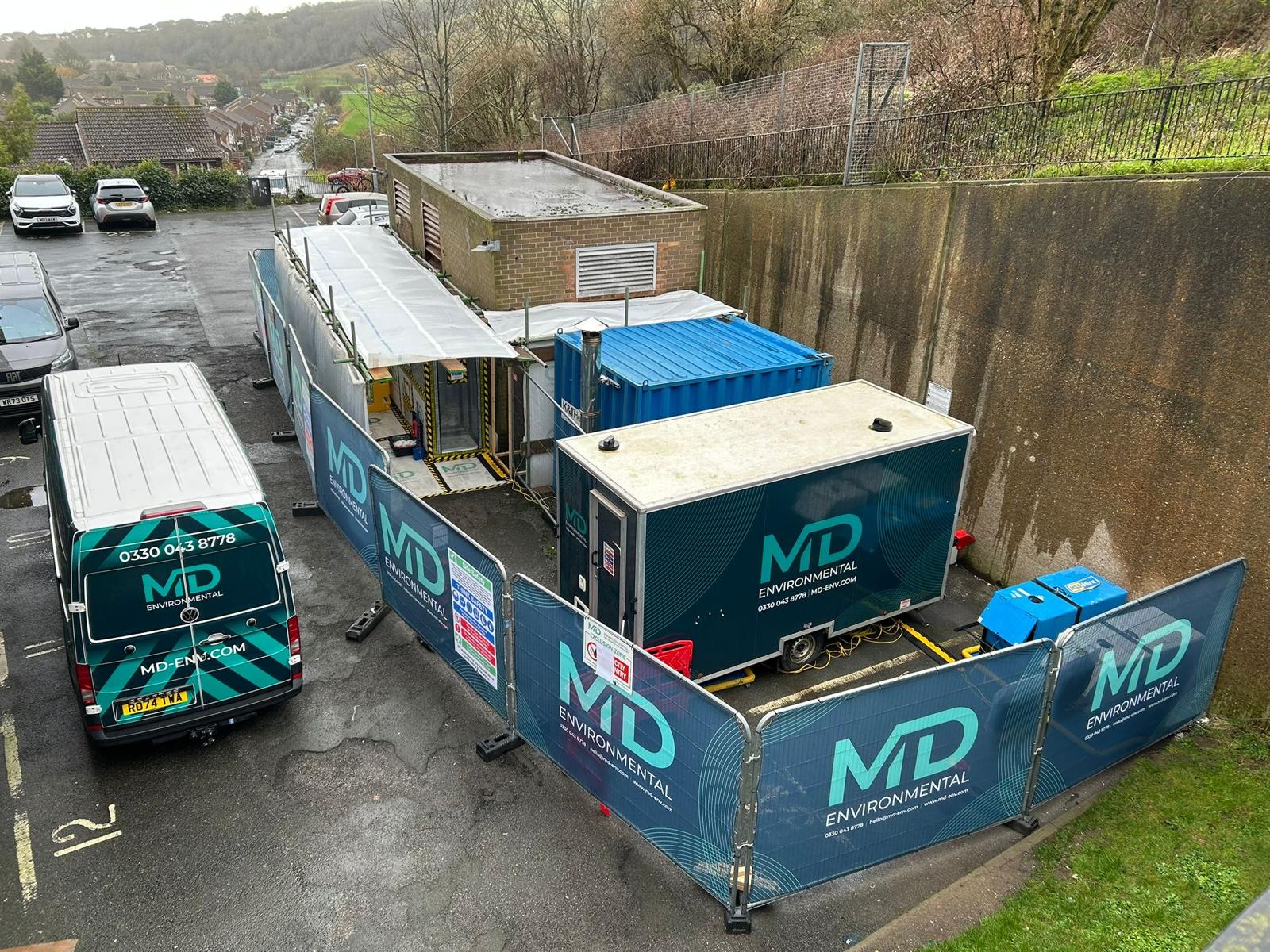

When asbestos is discovered in commercial buildings, some of the highest-risk areas are often hidden away from daily view:
- Boiler rooms
- Plant rooms
- Service ducts
- Ceiling voids
These areas contain extensive insulation systems, pipework, and ageing infrastructure — making them common locations for asbestos-containing materials.
And because access is often limited, materials can remain unnoticed for years until maintenance or refurbishment works begin.
Why Plant Rooms & Boiler Rooms Are High Risk
Historically, asbestos was heavily used in heating and service systems because of its:
- Heat resistance
- Fire protection qualities
- Durability
- Insulating properties
This made it common around:
- Boilers
- Pipework
- Ducting systems
- Mechanical services
Common Asbestos Materials Found
Typical asbestos-containing materials include:
- Pipe lagging
- Thermal insulation
- Asbestos insulation board (AIB)
- Gaskets and rope seals
- Ceiling and wall panels
- Service riser insulation
Many of these materials are considered higher-risk if disturbed.
The Risk During Maintenance & Refurbishment
Problems often arise during:
- Boiler replacements
- HVAC upgrades
- Electrical works
- Emergency repairs
- Refurbishment projects
Contractors may disturb hidden materials without realising asbestos is present.
👉 This is why proper surveys are essential before intrusive works begin.
Challenges in Live Commercial Buildings
Many plant room projects take place within:
- Offices
- Hospitals
- Schools
- Residential blocks
- Industrial facilities
This creates additional challenges around:
- Occupancy
- Access
- Noise
- Segregation
- Safety management
Works often need to be carefully phased to minimise disruption.
How Asbestos Works Are Safely Managed
Depending on the project, control measures may include:
- Controlled enclosures
- Negative pressure systems
- Airlocks and decontamination units
- Air monitoring
- Controlled waste removal
Every project is planned to minimise exposure risks and maintain compliance.
Legal Responsibilities
Duty holders and property managers are responsible for:
- Identifying asbestos risks
- Maintaining asbestos registers
- Ensuring safe contractor access
- Preventing exposure
Failure to manage asbestos correctly can result in:
- Safety incidents
- Project shutdowns
- Legal action
FAQs
Why is asbestos common in boiler rooms?
Asbestos was widely used around heating systems due to its heat-resistant properties.
Are plant rooms high-risk areas for asbestos?
Yes — particularly in older commercial buildings.
What type of survey is needed before maintenance works?
A refurbishment asbestos survey is usually required before intrusive works begin.
Can buildings stay operational during asbestos works?
In many cases yes, but strict segregation and controls are required.
Is pipe lagging dangerous?
If damaged or disturbed, pipe lagging can release hazardous asbestos fibres.
What should contractors do before starting work?
Always check asbestos information and ensure appropriate surveys have been carried out.
Need Support With Commercial Asbestos Risks?
At MD Environmental, we support commercial and industrial projects with:
- Asbestos surveys
- Licensed removal works
- Plant room and boiler room remediation
- Safe project planning and compliance support
👉 Protecting buildings, contractors, and occupants across the UK.
Call our team: 0330 043 8778
Email: hello@md-env.com
Speak to our team today for expert advice.